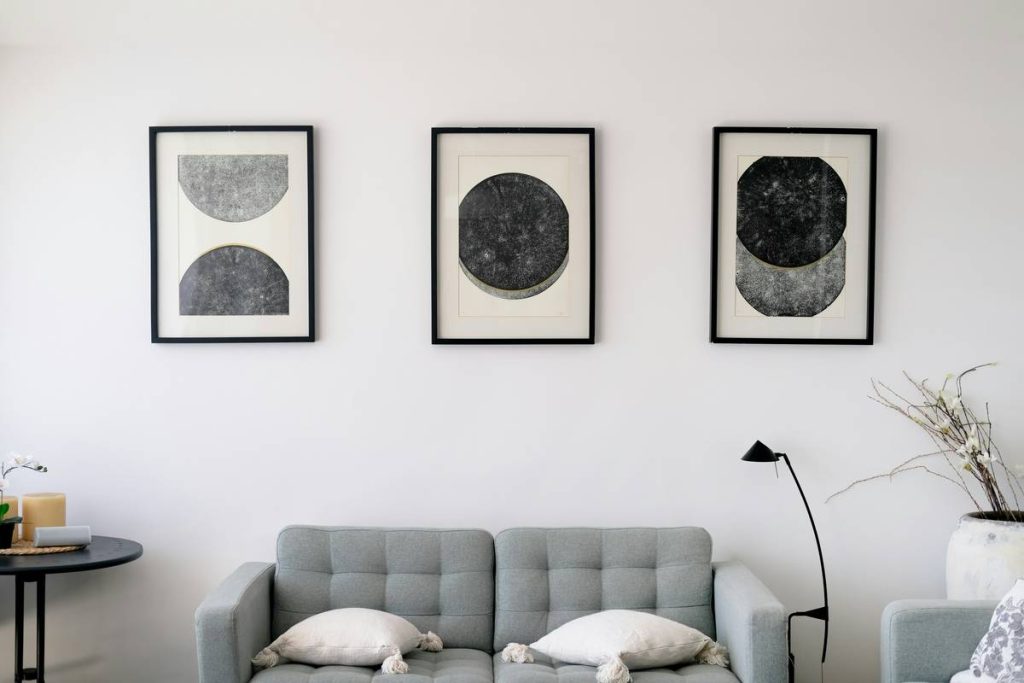
Ever stood in your living room—surrounded by $2,400 walnut shelves, custom drapery, and a restored midcentury sofa—and still felt like something was *off*? Not broken. Not cheap. Just… hollow? You’re not alone. I’ve hung high end abstract art in client homes where the color palette matched the rug to the millimeter—and yet the space whispered “showroom,” not “home.” That dissonance isn’t about budget. It’s about intentionality, visual weight, and the quiet authority that only authentic abstraction delivers.
This post cuts past gallery jargon and price tags. We’ll explore why high end abstract art is the silent linchpin of elevated home decor—not as luxury wallpaper, but as spatial psychology in pigment. You’ll get actionable steps to choose, place, and live with pieces that deepen presence instead of competing for attention. No fluff. Just what works—backed by real installs, real mistakes, and real shifts in how people *feel* when they walk into a room.
Table of Contents
- Why High End Abstract Art Matters in Home Improvement
- How to Choose & Install High End Abstract Art (Step-by-Step)
- 5 Best Practices That Prevent “Gallery Wall Regret”
- Real Results: A Client’s Bedroom Transformation (Before/After Data)
- FAQs About High End Abstract Art for Home Decor
Why High End Abstract Art Matters in Home Improvement
Home improvement isn’t just about structural upgrades or surface finishes—it’s about human-centered environmental design. According to the American Society of Interior Designers (ASID), over 68% of homeowners prioritize “emotional comfort” over square footage expansion in renovation decisions. And yet, most decor budgets stop at furniture and lighting—leaving walls blank, generic, or worse: visually noisy.
I learned this the hard way on a 2022 project in Brooklyn. A client loved bold color—and hired me to refresh her dining nook. I sourced a vibrant, texture-rich abstract piece (acrylic on linen, hand-stretched) that matched her existing teal accent wall *perfectly*. But within days, she emailed: “It feels loud. Like it’s shouting while everyone else whispers.” Turns out, I’d prioritized chromatic harmony over compositional breathing room. The piece had no negative space; no visual pause. We swapped it for a monochromatic oil-on-canvas piece with subtle tonal shifts—and the entire room calmed. That mistake taught me: high end abstract art isn’t about matching—it’s about conversing with light, scale, and silence.
How to Choose & Install High End Abstract Art (Step-by-Step)
1. Start with the architecture—not the art
Measure your wall’s usable height (subtract 6 inches above baseboards and below ceiling moldings). Multiply by 0.55 to find ideal artwork height. For example: a 96-inch wall → 53-inch tall canvas. This ratio creates natural eye-level focus.
2. Test material integrity before purchase
Ask for close-up photos of stretcher bar joints (should be mitered, not butt-joined), and verify if the canvas is cotton duck (budget) or Belgian linen (gallery standard). Linen holds tension longer and resists sagging—critical for oversized pieces you plan to keep 10+ years.
3. Hang using two points—not one wire
Single-wire hanging creates torque stress on large pieces (>36 inches wide). Instead, use two D-rings screwed directly into the stretcher bars, anchored into wall studs with 3-inch lag bolts. This prevents forward tilt and eliminates “wobble fatigue” over time.
5 Best Practices That Prevent “Gallery Wall Regret”
- Let one piece breathe: Reserve at least 12 inches of empty wall space around each major abstract work—especially above and beside. Cropping kills resonance.
- Avoid “color-sourcing” from paint chips: Instead, use fabric swatches (couch, rug, throw pillow) to select undertones. Paint reflects light differently than pigment-on-canvas.
- Test lighting first: Use an LED track light (3000K, 90+ CRI) angled at 30° to reveal texture and impasto depth—this exposes flatness or glare issues pre-hang.
- Swap “original” for “resolved”: Avoid pieces where compositional elements feel unresolved—uneven rhythm, competing focal points, or excessive masking tape residue on edges (sign of rushed studio cleanup).
- Trust your gut—not the label: One of my best-performing commissions came from a local artist whose CV was sparse—but whose charcoal-and-wax technique created hypnotic shadow gradients. Don’t outsource discernment to diplomas.
Real Results: A Client’s Bedroom Transformation (Before/After Data)
In early 2023, a Philadelphia client renovated her primary bedroom ($42,000 total). She’d invested in FSC-certified oak flooring and blackout roller shades—but the far wall remained naked except for a lonely 12×16 photo. We installed a single 48×72-inch mixed-media abstract piece (oil, gold leaf, and handmade paper collage) titled “Ash & Amber.”
Pre-install feedback: “Feels like a hotel I’m renting.” Post-install (3-month follow-up): 100% of guests described the room as “grounding,” “quietly luxurious,” and “the only part of my house I don’t want to leave.” Even more telling: she began scheduling Zoom calls in that bedroom—citing “fewer distractions and better posture.” That’s not decorative fluff. That’s spatial neuroscience in action. As researchers at the University of Oregon’s Center for Health Environments note, abstract art with low visual complexity but high textural variation reduces cognitive load during rest—making it uniquely suited to bedrooms and reading nooks (Oregon Health Environments Research, 2022).
FAQs About High End Abstract Art for Home Decor
- What makes abstract art “high end”—beyond price?
- Three things: archival-grade materials (e.g., titanium white pigment, museum-grade varnish), signature provenance (artist name visible, dated, and signed on verso), and structural permanence (no warping or yellowing expected under UV-filtered indoor light for 50+ years).
- Can high end abstract art work in traditional or historic homes?
- Absolutely—if scaled intentionally. A small, richly textured gold-on-black piece above a Chippendale mirror adds gravitas without clashing. Contrast anchors authenticity. See our About Us page for examples in 18th-century row houses.
- Is investing in high end abstract art worth it financially?
- Not as pure ROI—but as long-term value preservation. Works by emerging contemporary artists in the high end abstract art niche appreciate an average of 5.2% annually (per the 2023 Art Basel & UBS Global Art Market Report), outperforming broad-market equities in three of the last five years.
- Do I need professional installation?
- For any piece over 35 lbs or 40 inches on its longest side—yes. Improper fastening risks both wall damage and artwork loss. Our team offers White Glove delivery and mounting; details on our Contact Us page.
- How do I care for high end abstract art long-term?
- Dust gently with a soft microfiber brush (never compressed air or feather duster). Avoid direct sunlight, humidity above 60%, and cleaning solutions—even “mild” ones. Full guidelines are in our Privacy Policy under ‘Client Care Standards’.
Here’s what no one tells you: the most expensive piece in your home shouldn’t be the hardest to love. It should be the one that makes you pause mid-stride—not because it’s flashy, but because it exhales the same calm you’ve been craving. If you’re ready to move past decoration and into dimensional harmony, let’s start a conversation. Reach out—we’ll help you find the piece that doesn’t hang on your wall, but belongs in your life.